|
RadioFree.com: Like many other fans of Battlestar Galactica, I'm thrilled to see you in another science fiction project with Freaks. Have you always had an affinity for sci-fi, or was it something you came to embrace through early roles, and then ultimately Battlestar?
GRACE: You know, it's a genre that I don't think I was even really aware of, to be honest. I did not grow up in a household with a lot of pop culture. And so [when] people are bringing up some sort of topic or making a reference, I'm usually the one that's looking pretty blank. [laughs] With some of the early jobs that I had, I think it's because primarily I was based out of Vancouver, and that's what was shooting here. But one of the things I appreciated about Battlestar Galactica was that, yes, sci-fi was the backdrop, but at the same time, it didn't dwell too much on that, and they made it as realistic as they could. Sure, you have Cylons, you have robots...But at the same time, the themes that they were drawing upon--whether they be about war, or terrorism, or the government versus the people, freedom--are things that I think a lot of us can identify with just on a more human level, and as a society. And so I really like that. And of course, there are [science fiction] fans out there who will always love that, but I guess for myself, I'm not super hardcore sci-fi, necessarily.
So what were the things that fired your imagination growing up, and maybe even inspired you to pursue acting?
I think nowadays, children are so much more advanced, it seems, than I certainly remember from my memory as a child. I think I was just a late bloomer. And so for myself, it was really that innocent childhood, so I was playing with whatever was in my house, whether it be Lego, or hand-me-down Barbies or My Little Pony, or stuffed animals, that kind of thing, and you're just making your own little world. I was kind of like [Chloe in] this movie Freaks: I was in this little world where I was not that aware of the outside quite so much. [ponders] It's a good question. I'm wondering, what were the things that inspired me? I don't know if I had clear things. I certainly didn't want to be an actor. Because I remember someone asking me that once, and I was like, "Why would I want that?" It didn't draw me whatsoever. I know, it's strange, I'm like the anti-actor. [laughs]
 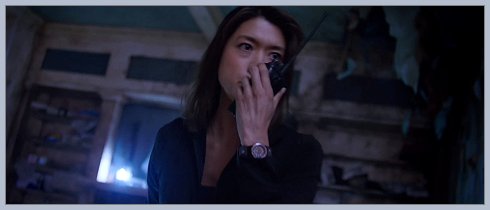
In playing Agent Ray for Freaks, did you see her more as a manipulative villain, or as someone who is trying to do right by society?
Absolutely, I do think that she's coming from a genuine sense of duty to what she thinks is right, and she's doing the things that she absolutely believes is best for the people. I think that's really true for her. But at the same time, to what ends, or what means? And it's interesting, because I did ask [writer/directors Adam Stein and Zach Lipovsky], "Do you want me playing her more like the bad guy? What are we going for? Do we want people to wonder the whole time?" And of course, it's more fun to play that you don't know. Like, can we trust her? Is she despicable? You don't know. And I think that's, a lot of times, what happens in life, which sparks a lot of debate, whether it be a corporation or a politician--just anybody, really. You know, what are their intentions? A lot of times, when there's a criminal court case, the first thing we always want to know is, "What was their intention behind it? What was their motivation?" People want to know why. And we're so curious about human beings and each other, and what drives us. I think it'd be actually really interesting if more people understood more about our own selves. But in the meantime, we're looking outside. And so yeah, with Agent Ray, it's not necessarily quite clear. And I was kind of treading a line as well, so even now, I'm reflecting back like, "What was I thinking?" It's hard to say, because is she using that as a way to get what she wants, or does she really believe it? And which one came first?
Though you didn't have many scenes together, your co-star Lexy Kolker had some kind words about you. How was your experience of acting with such a young scene partner?
[jokes] Working with Lexy was difficult. She was quite a diva. [laughs] I'm kidding...She was fantastic. I mean, a total pro. And I think when you have a movie like this where it's going to rest primarily on one [character], you really want to make sure that you have not only the best person onscreen, but also behind the scenes, because you are in the same space a lot. And then from that place comes creative decisions, and if you feel emotionally safe, then you can take bigger risks. And that's when it gets fun. You certainly can't have your best product when you're tiptoeing around worried. So yeah, it was a pleasure to work with her, and it was really fun to be able to watch the whole script come to life, especially when you didn't see some of these other roles [being filmed]. I know Aleks Paunovic who plays the guard who gets kind of "puppeted" by Lexy's character Chloe, and when he told me he got that role, I'm like, "Oh, you're going to be so good as that!" [laughs] Because you get to see him play a couple roles because of the story.
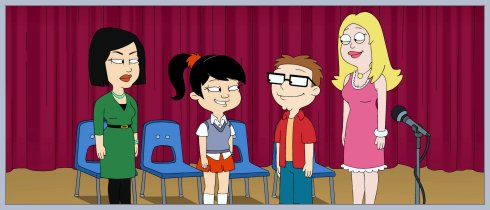
Since our interview at Comic-Con nine years ago, we've seen you in a few moments of comedy--you were very funny as both a mom gone wild in Adventures in Public School and the voice of schoolgirl Akiko on American Dad. With a career replete with sci-fi and action and drama, how did you like switching gears and just doing things for a laugh?
You know, it's funny, because even on Hawaii Five-0, there was definitely a lot of comic set-up. But my background definitely being more in the dramatic side, I was concerned, and I was like, "I really want to be able to hit these beats and these notes. Can you guys give me some time off so I can go to this comedy class in Los Angeles?" But we were working like dogs. There was no spare time. I could not get the time off. I'm like, "It will make the episodes better!" Nope. [laughs] And so it's definitely a special gift if you have that comic timing. And it's interesting because I was in an acting class once, and the class is sitting in front of you, and the teacher was coaching me step by step what to do and where to look--even little things like that. And there is, yes, an art to it, but there's also a science, [and] if you did it exactly like they said, even though the whole class heard all the directions and they knew where you were going to go, they would all erupt in laughter. And I did that on this other show once called The Cleaner. And it was a specific thing--like where you looked first, and then where you looked when you said the line. And I did it a certain way, and then they came back and said, "Do it this way..." And you did it, and you could just feel it--it was like it just felt funnier! It was so weird. So I would love to know a lot more about it. [And] it was definitely fun doing voiceover, because that's a completely different thing. You know, you don't have to get hair and make-up on, you just roll in however you look. And they're on the phone with you, and they're just asking you after every line to switch things up, and then they can change your voice, pitch it, all these kind of fun things. It's really fun to just witness that, because that side is a bit new for me. So to watch them do that is so cool.
Guest stars for voiceovers are often hired to use their own voice, but Akiko sounds so different from you. How did that performance come to be? Like, I still don't really recognize it as you...
I know! Well, I think one of the things is that Akiko is a young child, so obviously you have to pitch your voice up. And some of it's in the pacing, some of it they'll probably speed up a little bit. And then I do think that they pitched it up more than I had done it. And some of it's about just knowing what children sound like, and then putting yourself there and just being more open. When you're a child, you know less, and so you can make bigger mistakes, you're not as concerned about embarrassing yourself as much, you know? (Depending on how old you are.) [laughs] And so some of it's that, and the rest is just kind of the magic that they do.
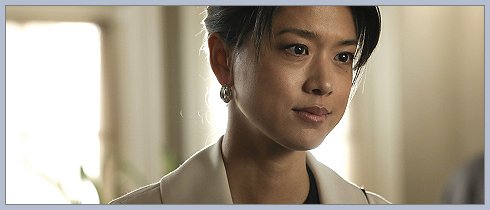
What are you looking forward to for the upcoming second season of A Million Little Things?
I think the storytelling gets even finer. So far, we read up to episode 8, and the feeling is that we really like the scripts and the way that they're coming across, the way that they're interweaving and how things are unfolding. Yes, you still have the surprises. Yes, you still have the lovable characters. But I feel like it's getting a little complex--not confusing, but you know, we settled in with who these people are, and then life is just so rich, and there are so many different nuances and complicated things. And I think the way the stories are told, you're able to kind of get that sense.
Expanding on our earlier discussion about working with Lexy, how would you describe your experience of acting with kids in general, given that they're an integral part of your ensemble cast?
It's different, and it's kind of really amazing when you do work with kids. You know, they're there because they're talented. And maybe they need to have a certain look, whatnot to fit in a story. But it's pretty astonishing for me, because they come in, they're goofing around, you're playing games or whatever, and then suddenly they drop in. And you don't know how it's going to go, you don't know if they can "pull off a scene" or not. And then your jaw drops a little and you're like, "Oh my gosh, they're really good!" [laughs] And so you root for them. Because we have a few kids in A Million Little Things. And you're there for the takes. Of course, you see the end product, but you're [also] there for the 20 versions that they do. And you don't expect people to hit it every, single, time--we're not robots. But the ones that are present and that are there, they're just so solid. And you know, they're not adults, it's a different type of polish on it. So I feel like there's an openness that you can receive, and it's really cool.
With so many intersecting storylines, are you given a behind-the-scenes rundown of the big picture, or does the story unfold piece by piece even to you?
Every show's going to be different, and with this one, DJ Nash, who's the showrunner, loves to keep secrets--and that means from us, as well. He specifically does not tell us anything unless he must. Or unless he just can't handle himself and he wants to tell you something. [laughs] But usually, it unfolds as it goes. I myself don't always necessarily think that's going to always help, but so far, it's worked out. And at the beginning of a season, he'll give you an idea of the season's arc. And then that way, you have a bit of a roadmap so you know where to hold back, where to push further, where to go to the left so it can feel harder when they're going to land on the right. Things like that. So I think those things are good so that you can tell the best story for the audience.
Grace, thank you for your time this morning, it was fun catching up!
Thanks so much, it's been a real pleasure. Hope you have a wonderful day!
|


